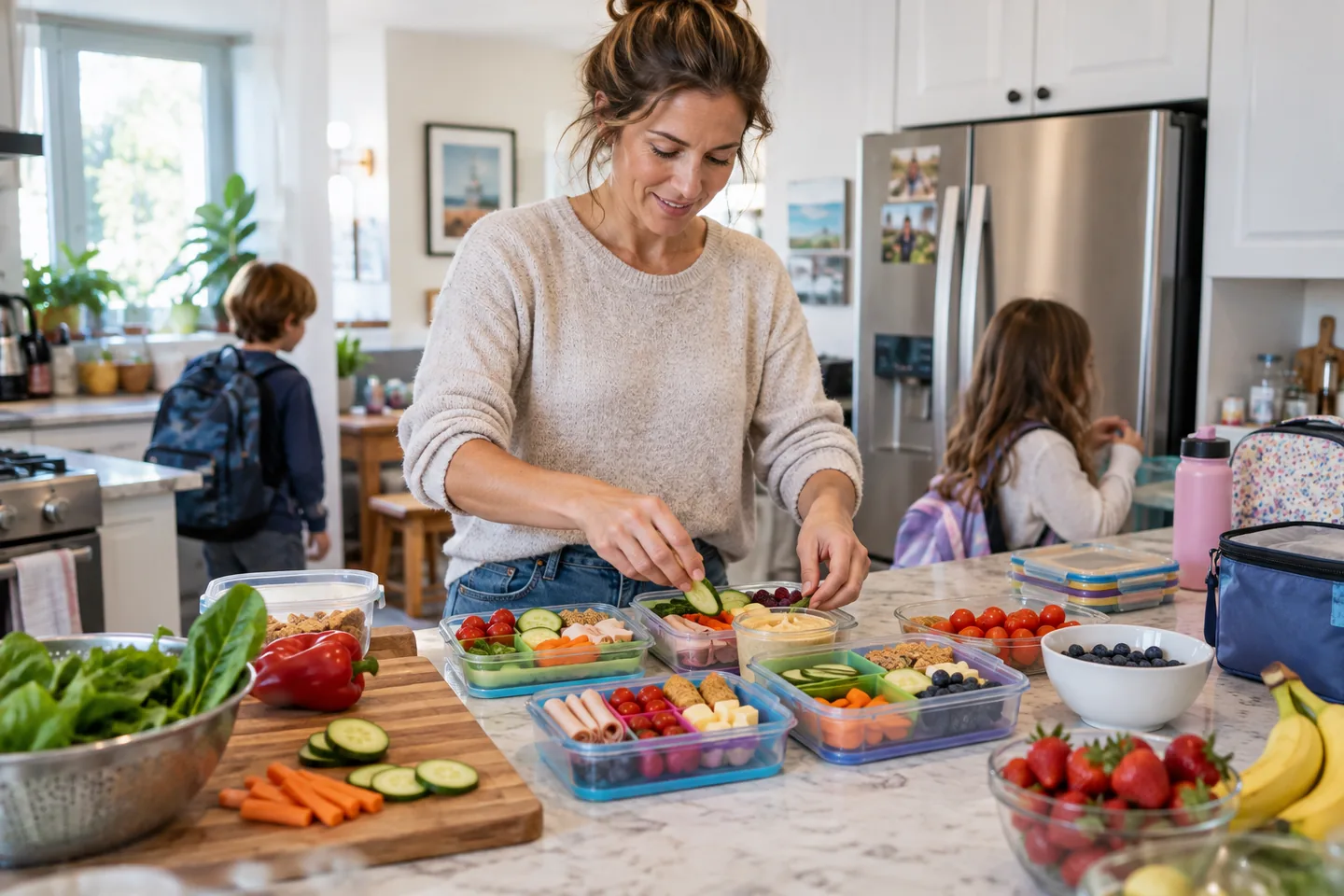
Meal prep usually fails in the last mile: mismatched lids, a soup leak in a work bag, or five containers that will not stack after lunch. A consistent system makes Sunday prep and Thursday cleanup equally manageable.
The short list
| Pick | Best for | Tradeoff |
|---|---|---|
| Rubbermaid Brilliance Best overall system | Packed lunches and visible fridge organization | The locking lids take more storage space than simple snap lids. |
| Pyrex FreshLock Best glass option | Frequent microwave reheating | A full lunch set is heavy and can chip if handled roughly. |
| OXO Smart Seal Best easy-stack alternative | Home leftovers and organized cabinets | Replacement lids and exact size matching should be checked before expanding the set. |
Our picks, by real-life fit
1. Rubbermaid Brilliance
Best for: Packed lunches and visible fridge organization
Rubbermaid offers Brilliance in multiple shapes, including meal-prep and glass formats, with clear walls and leak-resistant lids.
The tradeoff: The locking lids take more storage space than simple snap lids.
2. Pyrex FreshLock
Best for: Frequent microwave reheating
Glass bases resist staining and make a useful fridge-to-table choice.
The tradeoff: A full lunch set is heavy and can chip if handled roughly.
3. OXO Smart Seal
Best for: Home leftovers and organized cabinets
A tidy rectangular system helps reduce wasted shelf space.
The tradeoff: Replacement lids and exact size matching should be checked before expanding the set.
How to choose without overbuying
The highest specification is rarely the most useful specification. Start with the repeated situation that made you search for this product, then use these rules to remove options that create more work than they save.
- Choose two or three useful sizes instead of a giant assortment.
- Test whether an open lid fits your dishwasher rack.
- Keep one lightweight option for commuting.
- Check replacement-lid availability before investing in a system.
A routine that makes the purchase work
Products earn their place through habits, storage, and maintenance. This simple setup is more valuable than adding another accessory on day one.
- Cool steaming food before sealing unless the maker directs otherwise.
- Label date and contents when several meals look similar.
- Store bases nested and lids vertically so each part is visible.
What we would not do
- Microwaving a fully sealed container.
- Buying many tiny novelty sizes you rarely use.
- Assuming every lid, base, freezer, and oven combination has the same safety rating.
We base product statements on current published information and make an editorial inference about who each option fits. We do not claim hands-on testing, durability measurements, or performance benchmarks that ChoicesVera did not conduct.
The bottom line
For commuters, we prioritize a dependable seal and see-through walls. Glass is appealing for reheating and stain resistance, while lightweight plastic is easier in a backpack; the right answer can be a small mix of both. Compare the return policy and current price before ordering, especially when fit, feel, or compatibility cannot be confirmed from specifications alone.
Frequently asked questions
Glass or plastic for meal prep?
Glass is heavier but resists stains and suits reheating; plastic travels more easily. Many households benefit from using each where it is strongest.
How many containers do I need?
Start with enough for three to five meals plus two small snack or sauce containers, then expand only if the routine demands it.
Can lids go in the dishwasher?
Check the exact model instructions. Even dishwasher-safe lids may last longer on the upper rack away from intense heat.
Sources and fact check
Product details last checked 2026-09-17. Prices and availability change; ChoicesVera does not publish fixed price claims on this page.